
Masters of the Data Universe: What the numbers can’t tell you | Paul Sprackling
Within an ever-changing retail landscape, merchandisers need to guard against being pigeonholed as data compilers and should play an integral part in the trading strategy of any fashion retail company they work for, believes Paul Sprackling, a senior merchandising leader with a long track-record in some of the UK’s most beloved brands.
The danger of drowning in the data
The challenge is not becoming bogged down by the wealth of data that is available. “If you spend all your time in the data,” says Sprackling, “it’s likely you’ll lose sight of the customer and lose sight of what it what that data means to them. It’s easy to spend all your hours going through all the data available to you, but then you won’t be working in partnership with your buying team, your design team, spending time in the stores, all of which is vital to really being a great merchandiser. The challenge now is to not allow that part of your role to take over.”
“Every business is leaving customer demand out there, either on the shop floor or online,” he continues. “There are always things a customer has been asking for, looking to buy, but unable to buy, and you won’t see that demand from traditional data. You’ll only see the fulfilled demand.” Sprackling is a strong advocate for merchandisers heading out into stores, talking to staff, and observing what is really happening on the shop floor.
Focus on what matters: the 80/20 rule
He suggests the key to successful merchandising is to better manage the workload, to work out what you need to do, rather than what might be possible: “There’s always stuff you can do, but there’s only so much that you really need to do.” By way of example, he highlights the number of reports that are compiled without anything coming from them. “If you’re going to do something, it must provide an outcome for both you and the business. And then ultimately the customer.”
In practice, Sprackling applies a version of the 80/20 rule to keep his focus sharp. Around 80% of a range will typically behave as expected, and if that’s the case, it doesn’t need attention. It’s the remaining 20% that demands scrutiny: the lines that have overachieved or underachieved, and the question of what to do about them. Apply the same logic at category level, and suddenly a merchandiser is only actively looking at around 8% of their range at any one time. “All of us have only a fixed number of hours in the day,” says Sprackling. “You have to work out what you need to do in those hours.”
Why experience counts in a world of growing complexity
As Sprackling points out, when he started in the fashion industry, merchandisers only had to focus on UK retail stores. Today, though, they are typically working in multiple markets – possibly via their own stores or through wholesale; they have an online business to feed; and, possibly, concessions to factor in too.
That complexity makes experience and context more valuable than ever. Sprackling notes that the first year in a new department is often the hardest. Not because the data isn’t there, but because the merchandiser wasn’t there when it was made. “You’ve got all the data but you weren’t there when it was on the shopfloor,” he says.
“You haven’t got the colour that sits around it.” The merchandiser who was trading a range, visiting stores, and watching the market as it unfolded has a richer understanding of what the numbers mean than one who is encountering them cold. It is a reminder that data without lived context is always incomplete.
Beyond that, as Sprackling says: “Every single product has got 10, 20, 30, 40 attributes assigned to it and there are unlimited ways to look at the trading performance. How much stock have I got? What sold? In what types of stores? You could be there all day… so it’s understanding what are the big messages that really matter.”
Where AI fits in and why the merchandiser still leads
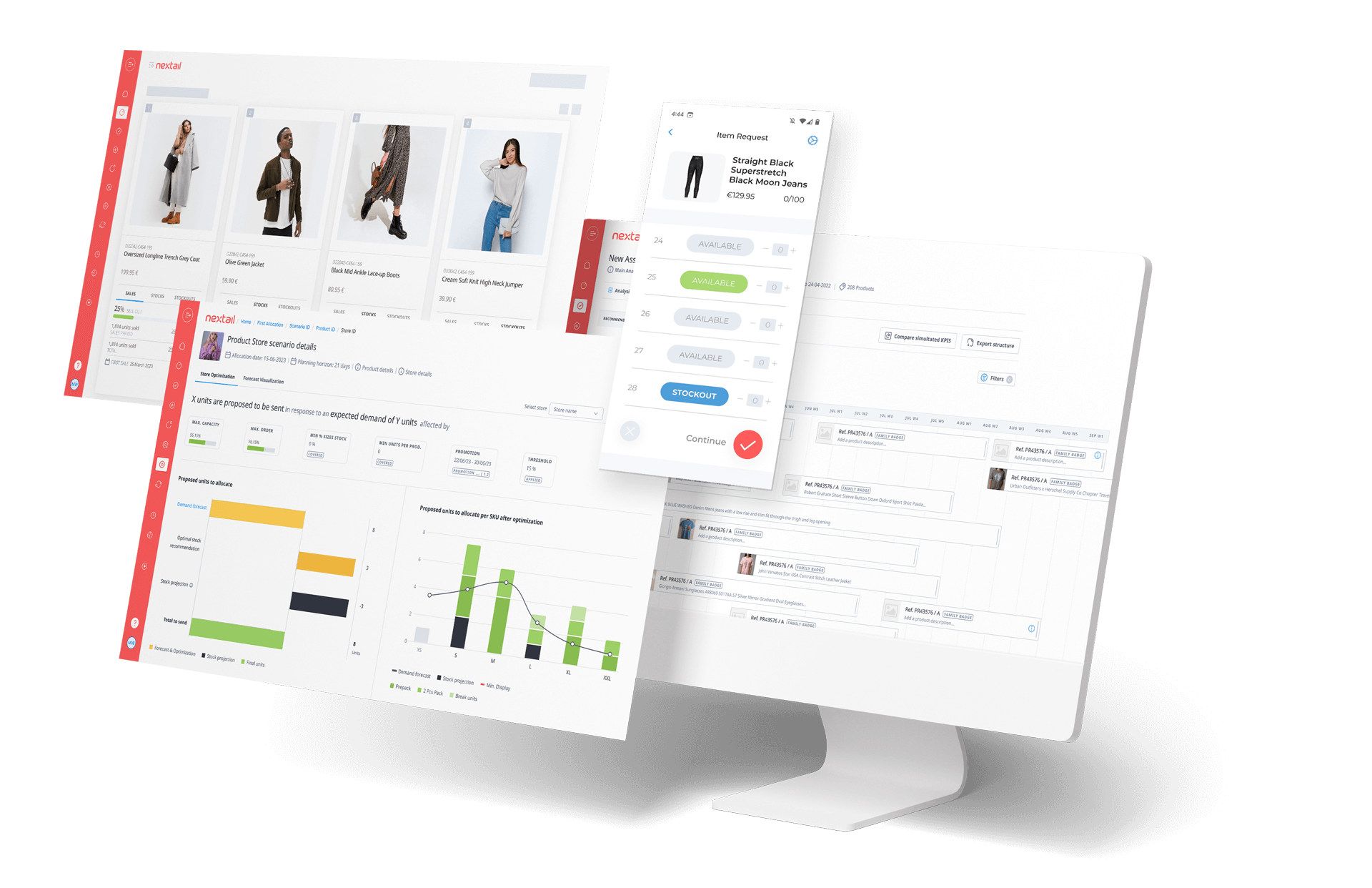
There is, of course, a role for new technology within this, easing the data overload. As Sprackling puts it, AI driven systems can do “the heavy lifting”, working through all the data that is available. But he stresses that the merchandiser still needs to be deeply involved and pushes back firmly on the idea that the role is becoming a purely analytical one. “A good merchandiser is able to take a large amount of data and identify the commercial patterns from within that data, and then think about what it means for products in a potential range or what you’re trading currently.”
For the information to be of any use, merchandisers need to set the correct parameters, ensuring whatever is delivered back is relevant. But also, importantly, the merchandiser needs to be in a position to appraise that information, the various scenarios a good AI platform will provide. They need to use their experience and knowledge of the business and the market it operates in to choose the best option. In short, they can focus on their primary role as commercial decision makers.
Merchandisers are an important cog in the machinery of any fashion retailer, integral to both current trading and the planning of future ranges. They need to understand the customer and the brand, as well as the broader retail landscape they exist in so they can make better decisions, both in terms of day-to-day business and as they plan for the future, working with designers and buyers to build collections that appeal to the consumer. The merchandiser who masters the data, rather than being mastered by it, is the one who will accomplish all this and more.
___
Does your team need merchandising heroes?
Explore real-life merchandising success stories with brands such as Mountain Warehouse, Guess, and Hackett London.